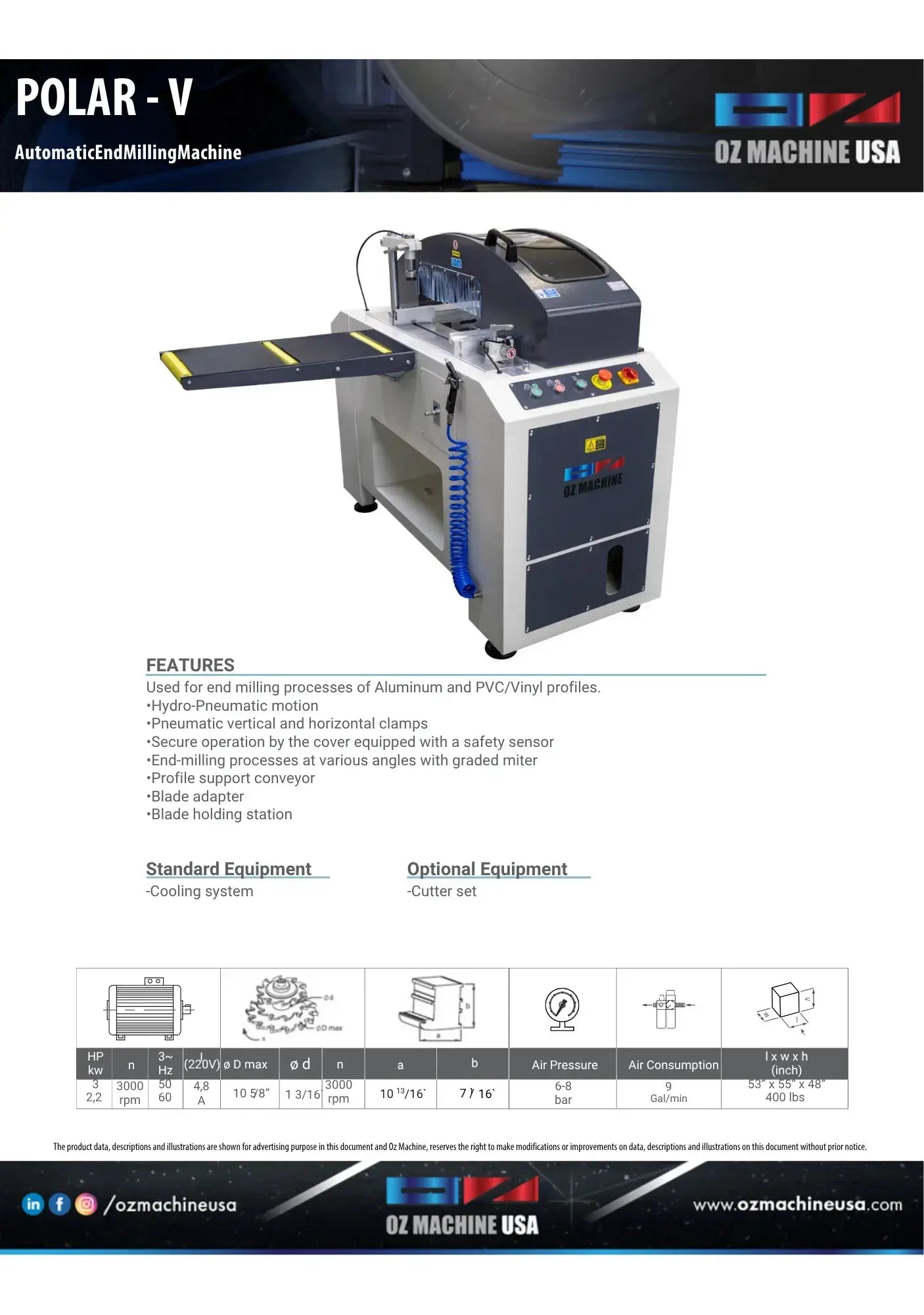
The Role of Automatic End Milling
The Role of Automatic End Milling in Modern Fabrication
In the world of high-volume window, door, and facade production, the "good enough" approach to profile joining is a thing of the past. To achieve seamless connections and structural integrity, manufacturers are turning to the Automatic End Milling Machine.
This isn't just another piece of hardware; it is the backbone of precision for aluminum and PVC profile processing. By automating the shaping of profile ends, these machines eliminate the guesswork and variability of manual fabrication.
What Exactly Is an Automatic End Milling Machine?
At its core, an automatic end milling machine is a high-speed precision tool designed to "clean up" and shape the ends of profiles. Whether you are working with aluminum, PVC, or composite materials, this machine uses specialized rotating cutters to remove material with surgical accuracy.
The goal? To create a perfect "seat" or joint interface so that two profiles can be joined typically for mullions or transoms with zero gaps and maximum strength.
How it works:
1. Secure Clamping: The profile is locked in place via a pneumatic or hydraulic system.
2. Automated Pathing: Once the parameters are set, the cutters move through the material automatically.
3. Repeatable Results: Unlike manual milling, the machine delivers the exact same cut on the 1st profile and the 1,000th profile.
Why Your Shop Needs an Automated Solution
Upgrading from manual methods to an automated system offers more than just a speed boost, it transforms your entire workflow.
- Flawless Assembly: When profile ends are milled with high precision, they fit together perfectly. This is critical for the weatherproofing and structural soundess of curtain walls and window frames.
- Boosted Throughput: Automation slashes the time spent on setup and manual adjustments. You can process more units per shift without increasing your headcount.
- Reduced Operator Fatigue: By handling the heavy lifting of clamping and cutting, the machine reduces physical strain on your team and minimizes the risk of human error.
- Total Consistency: Programmed operations ensure that every piece meets your quality standards, reducing scrap and material waste.
Versatility Across Industries
While most commonly associated with Window and Door Manufacturing, the utility of these machines extends far beyond:
| Industry | Primary Use Case |
| Facade & Curtain Walls | Precision milling for complex structural alignments in modern architecture. |
| PVC Extrusions | Creating clean, weld-ready ends for vinyl window systems. |
| Industrial Fabrication | Preparing specialized aluminum extrusions for modular framing and machinery guards. |
High-Performance Features to Look For
Modern end milling machines are packed with technology designed to withstand demanding industrial environments. Look for these "must-have" specs:
- Variable Depth & Angle Adjustment: For handling custom profile shapes.
- High-Speed Spindles: To ensure clean cuts without burrs or melting (especially in PVC).
- Integrated Safety Shields: Protecting the operator from debris and moving parts.
- User-Friendly Interfaces: Reducing the learning curve for new technicians.
The Bottom Line
For fabrication businesses looking to scale, the Automatic End Milling Machine is an investment that pays for itself through improved accuracy and reduced labor costs. If your goal is to deliver top-tier architectural products with zero-tolerance joints, automation is the only way forward.