What Machine Cuts Aluminum Profiles Best?
A profile that is off by even a fraction at the saw can create problems all the way down the line: poor corner joints, inconsistent frame dimensions, rework, and delayed installation. So, what machine cuts aluminum profiles? For most window and door fabrication operations, the answer is an aluminum upcut saw. The right configuration, however, depends on the profile geometry, required cut angles, daily volume, and how much downstream processing the job requires.
An aluminum profile is not simply a piece of stock to cut to length. Extrusions may have thin walls, thermal breaks, complex chambers, painted or anodized finishes, and demanding finish requirements. A suitable machine must hold the work securely, produce a clean burr-controlled cut, and repeat the same dimension throughout the shift.
What machine cuts aluminum profiles in production?
The standard production choice is a circular-blade upcut saw designed for non-ferrous materials. On this machine, the blade rises from below the workpiece into the profile. The profile remains clamped during the cut, which supports accuracy and improves operator safety compared with manually bringing material into a spinning blade.
Upcut saws are widely used because they combine a rigid cutting action with straightforward operation. With the proper carbide-tipped blade, adequate clamping pressure, and suitable cutting lubricant or mist system where needed, they can deliver clean cuts on common aluminum window, door, storefront, curtain wall, and architectural profile systems.
For a shop producing a range of fabricated units, the question is usually not whether an upcut saw is appropriate. It is whether a manual single-head saw, automatic single-head saw, or double-head saw best matches the workflow.
Single-head upcut saws for flexible fabrication
A single-head aluminum upcut saw is often the practical starting point for lower-volume operations, custom work, repair work, and shops cutting many different part lengths and angles. The operator positions the profile against a stop or measuring system, clamps it, and initiates the cut. Many models provide manual or pneumatic angle adjustment for common miter cuts.
This format gives a fabricator flexibility. If a work order includes short transom members, unusual angles, door components, and small batches, a capable single-head saw can handle the variety without dedicating a machine to one repeated dimension. It also occupies less floor space and generally requires a lower initial capital investment than a double-head system.
The trade-off is labor and cycle time. Every length must be positioned and measured, and the operator’s consistency has a greater effect on throughput. A manual saw can be highly accurate, but it does not eliminate the possibility of setup variation. Shops relying on manual measuring should use dependable stops, calibrated scales, and a documented first-piece inspection process.
Automatic-feed single-head saws move further toward production efficiency. They can feed material to programmed lengths and repeat cut cycles with less operator intervention. This is a strong option when part lengths repeat in batches but the business does not yet need the capacity or footprint of a double-head saw.
When a single-head saw makes sense
A single-head machine is a sound choice when production mixes change frequently, batch sizes are modest, or the work includes many nonstandard dimensions. It is also useful as a secondary saw in larger plants for one-off cuts, remakes, and components that do not fit the main production flow.
The machine should not be selected on blade diameter alone. Consider the maximum profile width and height, available miter range, clamping arrangement, material support, and whether the machine can handle the largest system your operation expects to fabricate. Buying for current stock only can limit future profile programs.
Double-head saws for frame production
A double-head saw is the higher-throughput answer for fabricators repeatedly cutting frame members to finished length. It has two cutting heads: one fixed and one movable. The operator or automated control sets the distance between heads, and both ends of the profile are cut in a single cycle.
For window and door frame production, this matters because it removes an extra handling step. Instead of cutting one end, repositioning the profile, measuring again, and cutting the other end, the machine creates the finished member with two controlled cuts. That improves speed and helps maintain squareness and length consistency across large batches.
Double-head saws are particularly effective for standard-sized windows, doors, storefront framing, and repetitive architectural systems. Automated positioning, digital readouts, and programmable length settings reduce setup time between repeated orders. Advanced models can store cut programs and optimize production sequences for shops with consistent volume.
The investment is higher, and the machine needs more floor space and material handling room. It also rewards steady demand. A double-head saw sitting idle will not solve a sales or scheduling problem. But for a fabricator losing hours each week to repeated measuring, handling, and recutting, it can be one of the most direct ways to increase capacity without adding equivalent labor.
Why a standard woodworking saw is not the answer
Some shops attempt to cut aluminum using equipment intended primarily for wood. This can produce acceptable results in limited circumstances, but it is not a dependable fabrication strategy. Aluminum requires the correct blade geometry, speed, feed behavior, clamping, and chip management. A poor setup can leave heavy burrs, pull material, damage finished surfaces, or create a safety concern.
A purpose-built aluminum upcut saw addresses these requirements with secure pneumatic clamping, guarded cutting zones, controlled blade movement, and work supports suited to extrusions. The result is more than a cleaner edge. It is a more repeatable process that supports downstream punching, drilling, notching, assembly, and glazing.
Miter saws and cold saws may have a place in maintenance departments or light fabrication environments, especially for simple cutoff work. They are not usually the first choice for a dedicated window and door production line. Bandsaws can cut aluminum as well, but they are generally slower and less suitable when accurate, clean, repeatable mitered profile cuts are the daily requirement.
Where CNC machining centers fit
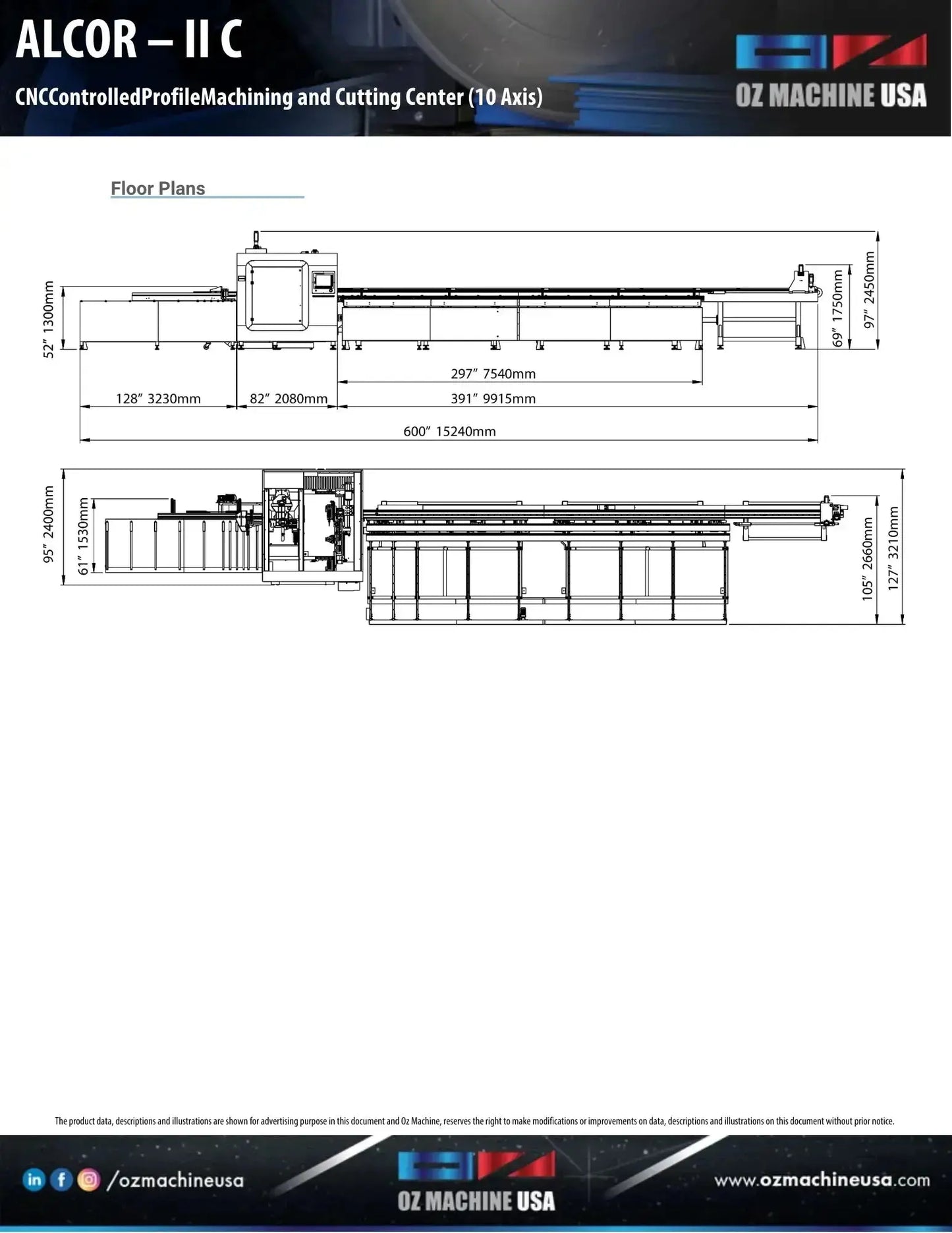
A CNC machining center can cut aluminum profiles, but it serves a different role than a dedicated cutoff saw. CNC equipment is designed for operations such as drilling, routing, slotting, end milling, notching, and machining hardware preparations. Some machines can perform sawing or cut-off operations as part of a larger automated process.
For profiles requiring numerous holes, lock preparations, drainage slots, hinge machining, or complex end details, a CNC center can reduce manual handling and improve repeatability. It becomes especially valuable when labor-intensive layout and secondary operations are limiting output.
That does not mean every shop should replace a saw with a CNC center. If the immediate bottleneck is simply cutting large quantities of standard frame members to accurate length, a double-head saw may deliver a faster return. If the bottleneck occurs after cutoff because operators are repeatedly measuring and machining complex features, CNC capability deserves closer evaluation.
The blade and setup determine cut quality
Even the right machine will underperform with the wrong blade or setup. Aluminum cutting blades typically use carbide teeth designed for non-ferrous metal. Tooth count, hook angle, kerf, and blade diameter must match the machine and the profile being cut. A blade suited to thin-wall extrusions may not be the best choice for thicker structural sections.
Clamping is equally important. The profile must be held firmly enough to prevent movement without crushing thermal breaks, decorative surfaces, or thin sections. Proper supports prevent long material from sagging, which can affect the final dimension and create handling risks.
Operators should monitor blade condition rather than waiting for a visible cut-quality problem. A dull or damaged blade can increase burrs, create heat, reduce accuracy, and place unnecessary load on the saw. Regular cleaning is also necessary because aluminum chips can interfere with clamps, stops, and moving components.
Selecting equipment around the actual workflow
The best machine choice starts with production data, not a catalog page. Review the number of cuts per shift, the percentage of standard versus custom sizes, typical profile dimensions, common miter angles, and the amount of rework associated with current cutting operations. Also consider what happens before and after the saw. Material infeed, cut-part labeling, offcut removal, and transfer to machining stations can all limit the benefit of a faster saw.
A growing operation may benefit from equipment that supports automation later, such as digital length positioning, programmable controls, or compatible infeed and outfeed systems. A smaller shop may place greater value on flexibility, compact footprint, and reliable service access. Neither approach is automatically better. The right decision is the one that makes production more consistent without adding complexity the operation cannot use.
For fabricators in Florida and the Southeast, local equipment access, installation support, parts availability, and operator training can be as important as the specification sheet. Sheffield Machinery Direct works with window and door manufacturers to match cutting equipment to real production requirements, from versatile single-head saws to automated systems built for higher output.
A clean, accurate cut is where a well-built unit begins. Choose the saw around your profiles, production volume, and future workload, then support it with the right blade, setup standards, and maintenance discipline.